There is a moment most RVers, anglers, and off-grid campers know well. You are miles from the nearest hookup, the trolling motor is drawing hard, or the Starlink is running overnight, and you watch that battery percentage drop faster than it should. If you bought your battery based on price alone, that sinking feeling was probably already baked in.
The lithium battery market has never had more options, which sounds like good news. But a growing share of those options are budget cells with questionable specs, no traceable quality control, and warranties that exist mostly in the fine print. It is the battery equivalent of a no-name trolling motor prop: looks right in the listing photo, priced to move, and a problem you only discover when you are already idling away from the launch ramp.
This article breaks down what actually separates a bargain lithium battery from a proven LiFePO4 and why the difference matters most before you find out the hard way.
What "Cheap" Really Means in the Lithium Battery Market
How budget batteries get their price tag
A low price on a lithium battery is almost never a coincidence. Budget battery manufacturers cut costs at the cell level, the BMS (battery management system), quality control, and post-sale support. When a battery lists 100Ah of capacity for a fraction of what a reputable manufacturer charges, something had to give. Usually it is all four.
Cells sourced from lower-tier suppliers may test close to rated capacity fresh out of the box. The problem surfaces after 50, 100, or 200 charge cycles, when real-world capacity has degraded to a fraction of what was advertised, or when a weak BMS fails to protect the cells under an actual load.
The no-name battery problem nobody talks about
A significant portion of budget lithium products available online are sourced through short-order supply chains with no ongoing quality oversight or post-production accountability. Cell batches from different manufacturing runs get mixed. BMS tolerances vary unit to unit. The buyer has no practical way to verify what they actually received until the product fails in the field.
This is not to say every low-cost import is defective. The point is that there is a meaningful, verifiable difference between a manufacturer with 7+ years of documented field testing and a product listing that appeared on the internet three months ago with a suspiciously clean review history.
What specs actually matter (and which ones get fudged)
Nominal capacity in amp-hours is the most commonly inflated figure in budget battery listings. Equally important, and far less consistently disclosed, are usable capacity at real discharge rates, cycle life under actual load conditions, operating temperature range, and continuous discharge current from the BMS. A battery rated at 100Ah that can only deliver 70Ah at a 50A load in 60-degree weather is not a 100Ah battery for your trolling motor setup. It is a liability.

Real-World Performance Differences
What happens to capacity under real loads
LiFePO4 chemistry delivers a flat discharge curve, meaning voltage stays relatively stable from roughly 90% capacity down to around 20%. Budget lithium cells, particularly those built with inconsistent or lower-grade materials, can show significant voltage sag under load. That sag translates directly to reduced trolling motor thrust, dimmer fish finder performance, and shorter sessions on devices that depend on stable input voltage.
For boaters especially, voltage sag is not just a performance nuisance. Many electronics have low-voltage cutoffs that shut the device down before the battery is technically depleted, cutting your effective capacity even further than the raw numbers suggest.
Voltage stability on the water vs. in the spec sheet
Spec sheets are written at ideal conditions. Your morning on the water is rarely ideal. A proven LiFePO4 battery holds its voltage within a narrow range throughout the discharge cycle, which means your trolling motor performs consistently from the first drop of the anchor to the last cast. Budget cells can drift noticeably lower mid-discharge under comparable load, which is detectable in motor response and can trip the protection cutoffs in sensitive fish finders or navigation electronics.
Cold weather and heat performance
LiFePO4 is one of the most thermally stable lithium chemistries available. It handles a wider operating temperature range than most alternative lithium formulations and performs meaningfully better in moderate cold than lead-acid alternatives. Budget batteries frequently do not specify which lithium chemistry they use, which means you may be running a less stable formulation without knowing it. Some lithium chemistries are significantly more sensitive to overcharge, deep discharge, and temperature extremes, and none of that shows up in the product photos.
Safety and Chemistry
LiFePO4 vs. other lithium chemistries
Not all lithium batteries are the same. LiFePO4 (lithium iron phosphate) was developed specifically for applications where cycle life, thermal stability, and safety take priority over raw energy density. The chemistry is inherently more resistant to thermal runaway than lithium cobalt oxide or lithium manganese formulations, which are more common in budget consumer cells. According to Battery University, LiFePO4 chemistry offers superior thermal and chemical stability compared to other lithium-ion types, making it the preferred choice for stationary and mobile applications where longevity and safety matter most.
When you see a battery marketed as simply "lithium" with no chemistry specified, that omission is worth paying attention to. Not saying you need to be Walter White, but for a battery installed in your RV, mounted on your boat, or serving as emergency backup power at home, knowing what chemistry you are relying on is a basic due diligence step.
BMS quality and what it actually protects against
The battery management system is the safety net between the cells and everything else in your electrical system. A well-designed BMS handles overcharge protection, over-discharge protection, short circuit protection, cell balancing, and temperature cutoffs. A weak BMS may handle some of these functions partially or not at all, and because BMS quality is not visible from the outside of the battery, buyers often discover the gap only when the failure is dramatic or costly.
Bioenno Power batteries include a purpose-built BMS matched to each battery's specific cell configuration and validated against the actual discharge rates each product is designed to support. That is a different level of engineering than a BMS chosen to hit a cost target.
Why cell consistency matters
Even when individual cells in a battery pack test within spec on day one, a pack assembled from inconsistent cells (differing internal resistance, slightly different capacity) will degrade faster than a pack built from properly matched cells. Inconsistent cells force the BMS to work harder balancing the pack, accelerate uneven aging, and reduce overall cycle life well below what the rated number suggests. Cell matching is one of the harder quality factors to assess from a product listing and one of the easier corners to cut in fast-turnaround manufacturing.
Long-Term Cost vs. Upfront Price
Cycle life and what it means in real years
A quality LiFePO4 battery rated for 2,000 or more charge cycles, used once daily, would last roughly five to seven years before meaningful degradation. A budget battery rated for 500 cycles or one that simply does not disclose cycle life under the same usage pattern could need replacement in under 18 months. When you factor in replacement cost and the friction of swapping out a battery mid-season, the budget option is frequently more expensive over any multi-year horizon, not less.
For RVers and boaters who put serious use on their batteries during peak season, this math compounds quickly. A higher cost per cycle is not a premium you pay for a brand name. It is a real reduction in lifetime cost.
Warranty and support reality check
Reputable manufacturers back their products with real warranties and accessible support. Bioenno Power offers a comprehensive replacement warranty and USA-based support staffed by people who know the products, not an auto-reply ticket system. Budget battery warranties, when they exist at all, often contain clauses that make them difficult to claim in practice, and some sellers are no longer operating by the time a warranty issue surfaces.
If you cannot find a phone number or a real support contact for the company that made your battery, that is relevant information.
The hidden cost of a battery that fails mid-trip
The most expensive failure is the one that happens 40 miles offshore or on day three of a week-long boondocking trip. Beyond the price of a replacement battery, there is the cost of a cut-short trip, potential damage to other electronics from voltage irregularities during a BMS failure, and in some cases towing or retrieval expenses. You can explore the full Bioenno Power product line and find options built for exactly these conditions.

How to Choose the Right LiFePO4 Battery
Sizing for your use case
Choosing the right battery starts with knowing your actual load. For trolling motors, the key variables are motor voltage (12V, 24V, or 36V), thrust rating, and hours per day at varying speeds. For RV and boondocking setups, total daily amp-hour draw across all loads is the starting point. Getting sizing right matters more than getting the lowest price. The cost difference between a correctly sized and an undersized battery is almost always less than the cost of the problem the undersized battery creates.
Bioenno's portable power batteries are designed for exactly these applications, and finding the right capacity for your setup is straightforward in the portable power collection.
What to look for in a manufacturer
Before committing to any lithium battery, a few basic questions are worth asking. How long has the manufacturer been selling this specific product? Where are the batteries assembled, and is there documented quality oversight? Does the product page specify the BMS continuous discharge rating and the actual cell chemistry? Is there a real, reachable support channel with staff who can answer technical questions? For buyers who want to extend their system with solar charging, Bioenno's solar & outdoor collection offers components that have been tested alongside the battery line.
Bioenno Power's approach
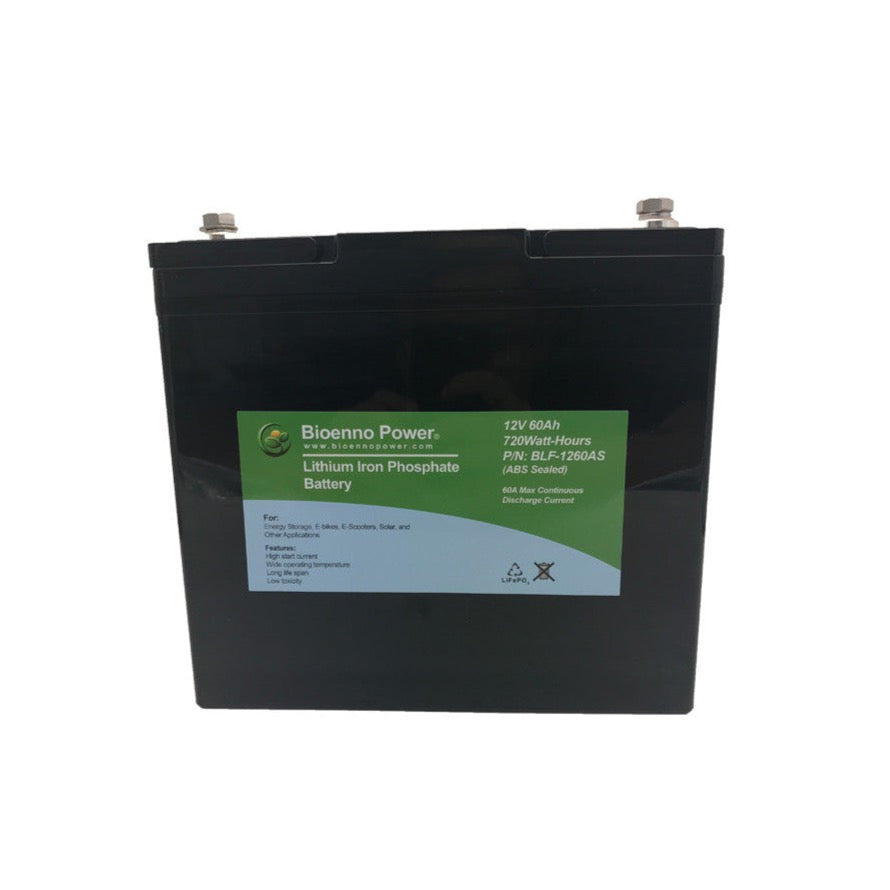
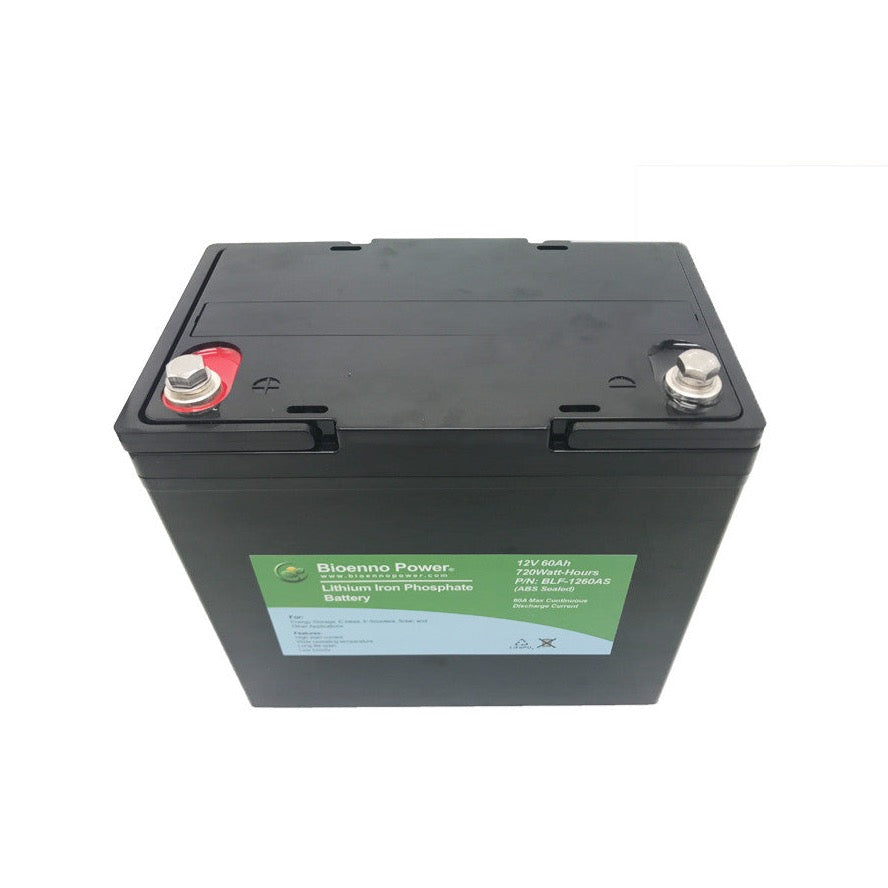
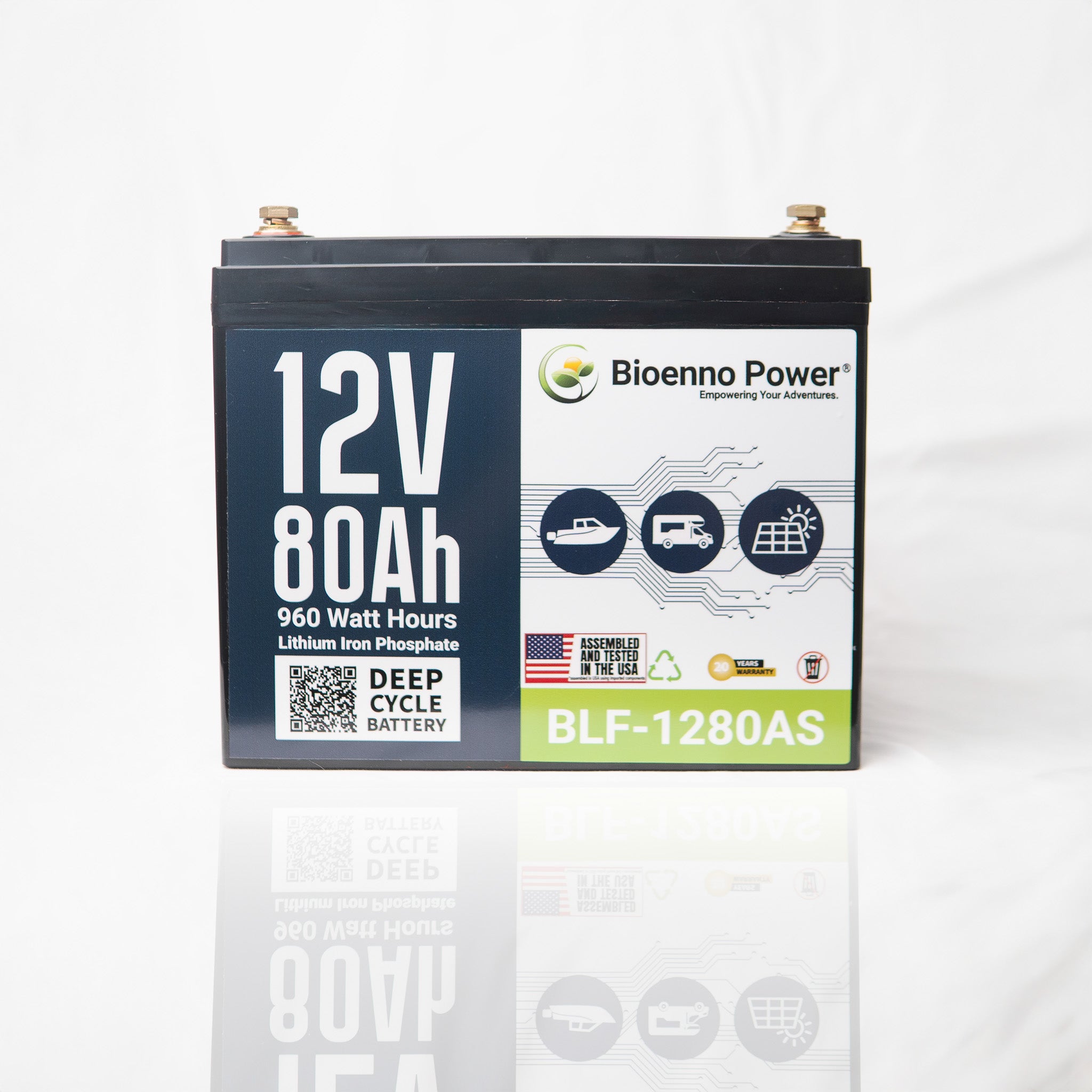
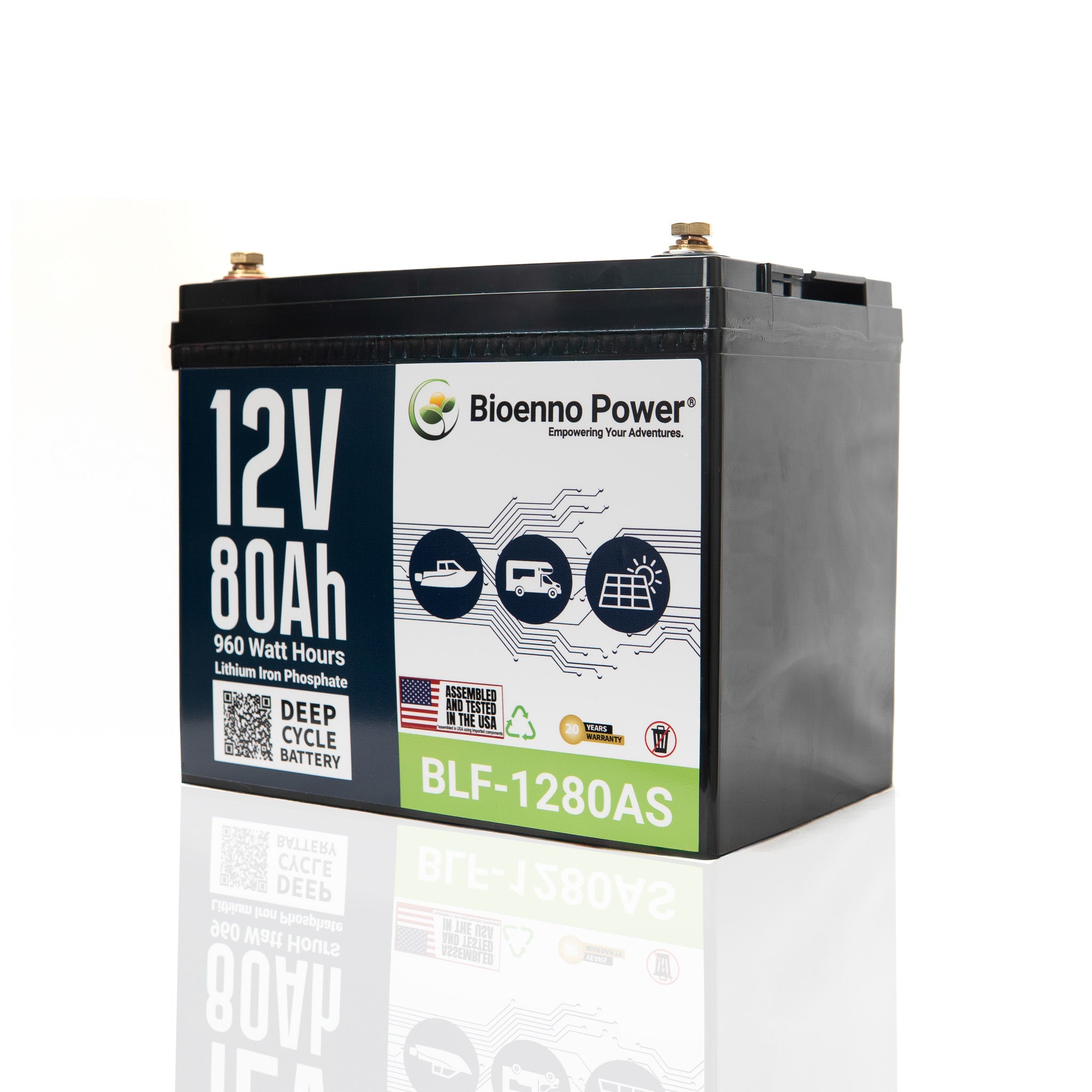
Bioenno Power batteries are assembled in Santa Ana, California with more than seven years of field testing across marine, RV, ham radio, and off-grid solar applications. Every battery ships with a comprehensive replacement warranty and direct access to USA-based technical support. The product line covers 12V, 24V, and 36V configurations for trolling motors, RV battery banks, portable power, solar storage, and emergency backup. Customers looking for convenient, all-in-one portable power can also explore the PowerPacks lineup, which pairs proven Bioenno cells with ready-to-use enclosures for mobile and outdoor applications.
The Bottom Line on Bargain Lithium
The no-name listings and rock-bottom prices are easy to rationalize when the price difference is significant. But the battery is not the place to absorb unknown risk. For RVers, anglers, and off-grid users, the right battery is the one that performs at full rated capacity, consistently, in the conditions you actually use it in. Not the conditions on the spec sheet.
LiFePO4 chemistry, matched cells, a properly designed BMS, and a manufacturer who stands behind the product are the factors that determine whether a battery deserves the trust you are placing in it. For more on Bioenno applications, battery care, and power planning, the Bioenno blog is a solid place to keep learning.
If your current battery is already making you wonder, it may already be answering your question. Shop Bioenno Power now and get a system that is built to be there when it counts.