If you have ever tried to piece together a solar charging setup from scattered advice online, you have probably seen the pattern. Someone buys a LiFePO4 battery and a solar panel, asks how to connect them, and quickly gets buried in contradictory opinions about MPPT vs. PWM, peak sun hours, and battery settings.
It does not have to be that complicated. Pairing solar with a LiFePO4 battery comes down to three practical decisions: how much panel output you actually need, which charge controller fits your setup, and how much battery capacity covers your real daily load. This guide walks through all three in plain terms, with specific product options from bioennopower.com and real-world context drawn from the communities where these systems get built and tested every day.
Why LiFePO4 and Solar Are a Natural Pairing
What Sets LiFePO4 Apart from Lead-Acid
LiFePO4 (lithium iron phosphate) batteries handle solar charging in a fundamentally different way than traditional lead-acid or AGM batteries. They accept charge faster across their full capacity range, tolerate deeper discharges without long-term damage (typically down to 20% state of charge versus 50% for lead-acid), and complete thousands of cycles before meaningful capacity fade. For a solar system that charges and discharges every single day, that cycle life advantage translates directly to years of additional reliable service.
In general, LiFePO4 batteries tend to accept charge more efficiently than lead-acid batteries during typical solar charging, can be used at deeper depth of discharge without the same long-term degradation concerns as lead-acid, and commonly offer substantially higher cycle life when operated within manufacturer specs. For a quick overview of depth-of-discharge guidance (including the common 50% DoD recommendation for lead-acid), see Battery University’s primer.

How Solar Fits Into the Picture
One of the most practical advantages of LiFePO4 in solar applications is how gracefully it handles partial and interrupted charging. Unlike lead-acid batteries, which suffer sulfation damage when left in a partial state of charge for extended periods, LiFePO4 chemistry tolerates partial charges without long-term penalty. A cloudy afternoon, a shaded parking spot, or a few hours of intermittent panel output will not damage your battery the way it would with a traditional chemistry. This real-world resilience is a consistent theme in field reports and forum threads from boondockers and off-grid users who have run these systems through full seasons of real use.
The Three Components Every Solar System Needs
Solar Panels: Matching Watts to Your Daily Load
A solar panel's watt rating reflects its output under ideal, direct-noon-sun conditions. In practice, most setups see 4 to 6 usable hours of meaningful solar production per day depending on location and season. A 100-watt panel producing 5 peak sun hours delivers roughly 500 watt-hours of energy per day before accounting for system losses.
Bioenno's foldable solar panels range from 28W through 150W, all available through their solar panel and controller collection. The BSP-28 (28W) and BSP-60-LITE (60W) are solid choices for portable and field setups. The BSP-100-LITE (100W) and BSP-150-LITE (150W) cover the larger daily loads typical of van life or off-grid cabin use. The foldable format makes all of them practical for any application where a fixed roof-mount panel is not an option, whether that is a campsite, a field radio operation, or a kayak.
A customer testimonial on Bioenno's testimonials page captures this well: a ham radio operator ran a Bioenno PowerPack and a 28-watt foldable panel through a full day of field operation and reported that "this kind of power and radio system works for me very well" with everything performing as expected across hours of use.
Charge Controllers - PWM vs. MPPT Explained
The charge controller sits between your solar panel and your battery and regulates voltage so the panel does not overcharge the cells. There are two types every beginner will encounter.
PWM (Pulse Width Modulation) controllers are simpler and less expensive. They work best when your panel's operating voltage is close to your battery's charging voltage. Bioenno's SC-122420JUD (20A PWM, 12/24V) and SC-4830JUD (30A PWM, 12-48V) are both designed specifically for LiFePO4 batteries.
MPPT (Maximum Power Point Tracking) controllers are more efficient, particularly when panel voltage exceeds battery voltage or when operating under partial shade and low-light conditions. MPPT can increase energy harvest by roughly 5% to 30% versus PWM depending on conditions. Bioenno's SC-122420NE (20A MPPT, 12/24V) and SC-122430NE (30A MPPT, 12/24V) deliver that improved harvest in a package built specifically for LiFePO4 systems.
For most beginners running a single panel with a modest battery, a PWM controller performs well and keeps costs down. If you are running a larger panel array or want to maximize daily harvest during shorter winter days, MPPT is worth the price difference.
The Battery - How Much Storage Do You Actually Need
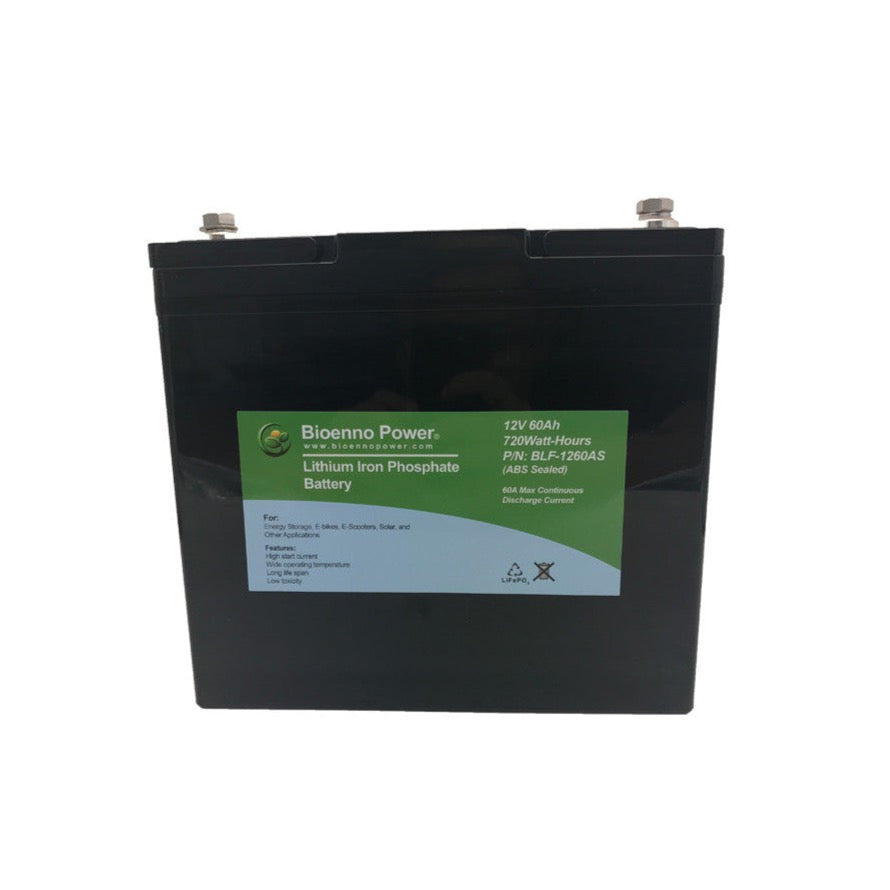
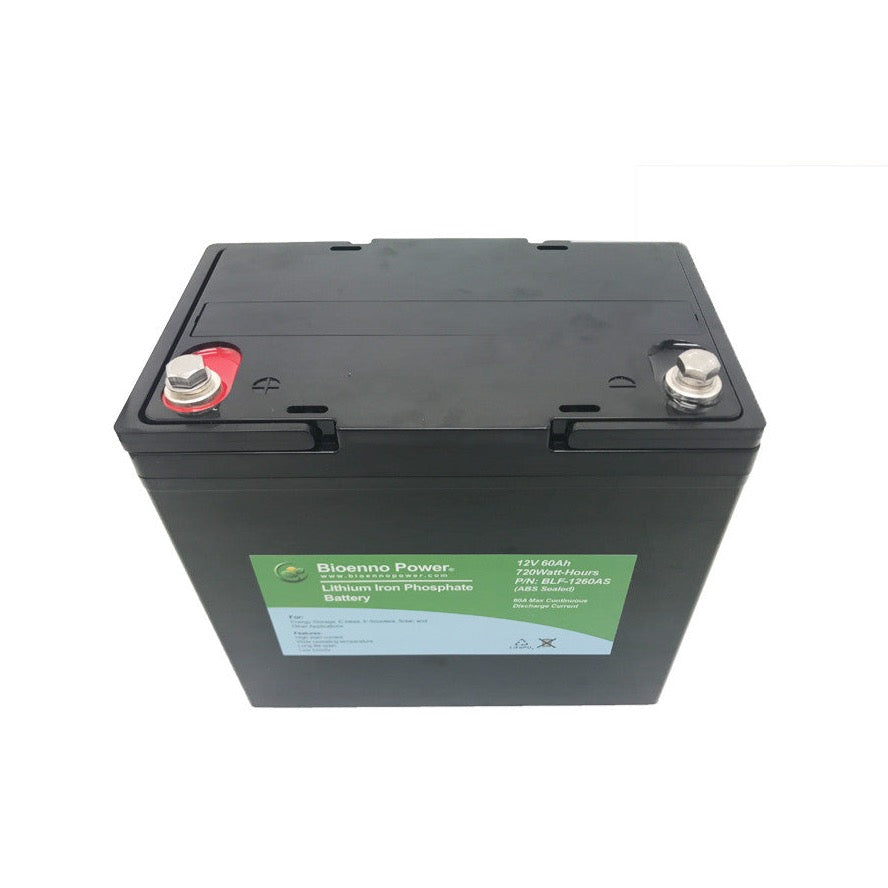
Battery capacity is measured in amp-hours (Ah) or watt-hours (Wh). A 12V 50Ah battery holds 600Wh of accessible energy. The right size depends entirely on your daily consumption and how many days of autonomy you want between full solar recharges. Bioenno's LiFePO4 batteries built specifically for solar cycling range from compact 12Ah and 20Ah units up through 80Ah and 100Ah banks, all designed for the repeated charge and discharge cycles that daily solar use demands.
How to Size Your Solar Panel for Real-World Use
Step 1: Calculate Your Daily Energy Consumption
Start by listing every device you plan to run and how long you will use it each day. A phone charger drawing 10W for two hours uses 20Wh. A 12V portable fridge running continuously at 40W uses roughly 960Wh per day. A ham radio transceiver at 25W for four hours of active operation uses 100Wh. Add those together and you have your total daily load. That number is the foundation for every other sizing decision you will make.
Step 2: Factor In Peak Sun Hours
Divide your total daily watt-hours by your average peak sun hours for the region. If your area gets 5 usable hours and you need 500Wh per day, you need at least 100 watts of panel capacity to break even on a clear day. A consistently recommended rule of thumb across r/SolarDIY threads is to add 25% to your calculated panel size to account for real-world variation in sun exposure, seasonal differences, and suboptimal panel angles. That buffer is the difference between a system that works perfectly on a clear June afternoon and one that keeps up through October.
Step 3: Build In a Loss Buffer
Every solar system loses energy through wiring resistance, charge controller operation, and DC-to-AC conversion if you are running an inverter. Every solar system loses energy through wiring resistance, charge controller operation, and DC-to-AC conversion if you are running an inverter. A practical planning range is often 10% to 30% total losses depending on system design and component choices. Building this buffer into your sizing upfront prevents the frustration of a system that looks right on paper but falls short in actual daily use. A 500Wh daily load with 20% system losses means you need to produce 625Wh from your panels each day just to stay even.

Setting Up Your Charge Controller Correctly for LiFePO4
Why the LiFePO4 Profile Matters
This is the step most beginners skip, and it generates a consistent stream of support threads across r/OffGrid and the DIY Solar Power Forum. Most charge controllers ship defaulting to an AGM or flooded lead-acid charging profile. Running your LiFePO4 battery on one of those profiles either leaves it chronically undercharged or applies voltage targets that were never designed for lithium iron phosphate chemistry.
Always verify your controller is set to a LiFePO4 profile before your first charge cycle. Bioenno's solar charge controllers come with LiFePO4-specific profiles built in and preconfigured for use with Bioenno batteries, which removes this step entirely for users pairing components from the same ecosystem. If you are connecting a third-party controller to a Bioenno battery, locate the battery type setting before you connect anything and confirm it before your panels see sunlight.
The Charging Voltages That Protect Your Battery
For a standard 12V LiFePO4 system, many manufacturers and technical guides recommend bulk/absorption settings around 14.4V to 14.6V, with float (if used) commonly around 13.5V to 13.8V depending on the charger/controller and whether you are supporting active loads. For a simple overview of typical lithium charging voltage ranges and best practices, see Battery University’s guide.
Common Mistakes Beginners Make (and How to Avoid Them)
Undersizing the Battery Bank
The single most common beginner mistake is building a system that cannot cover a full day of real-world use. The math looks fine during planning, but real loads run longer than estimated, peak sun hours come in lower than expected, and there is no margin left when conditions are less than ideal. It is a predictable outcome when the initial build is sized exactly to the theoretical load with no buffer.
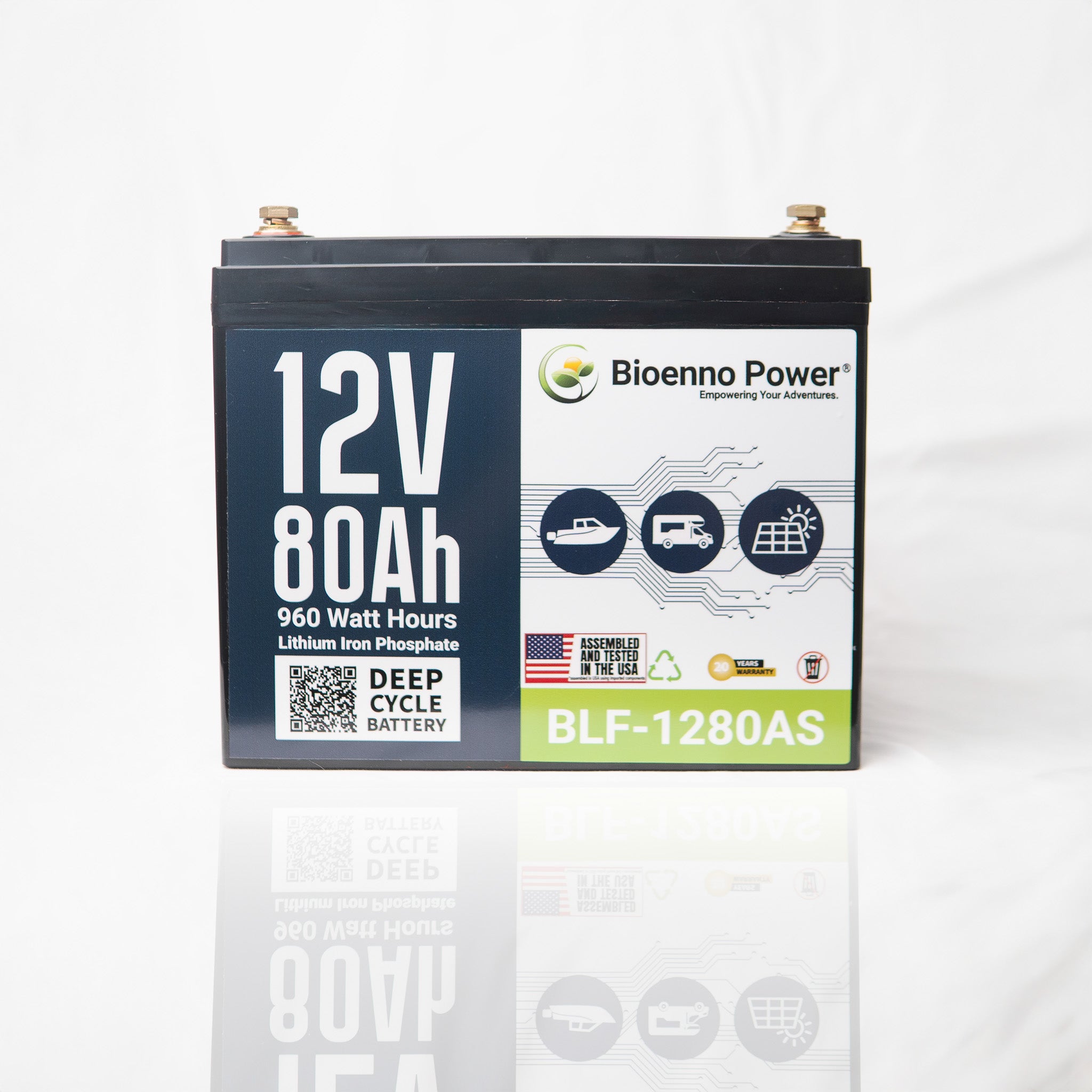
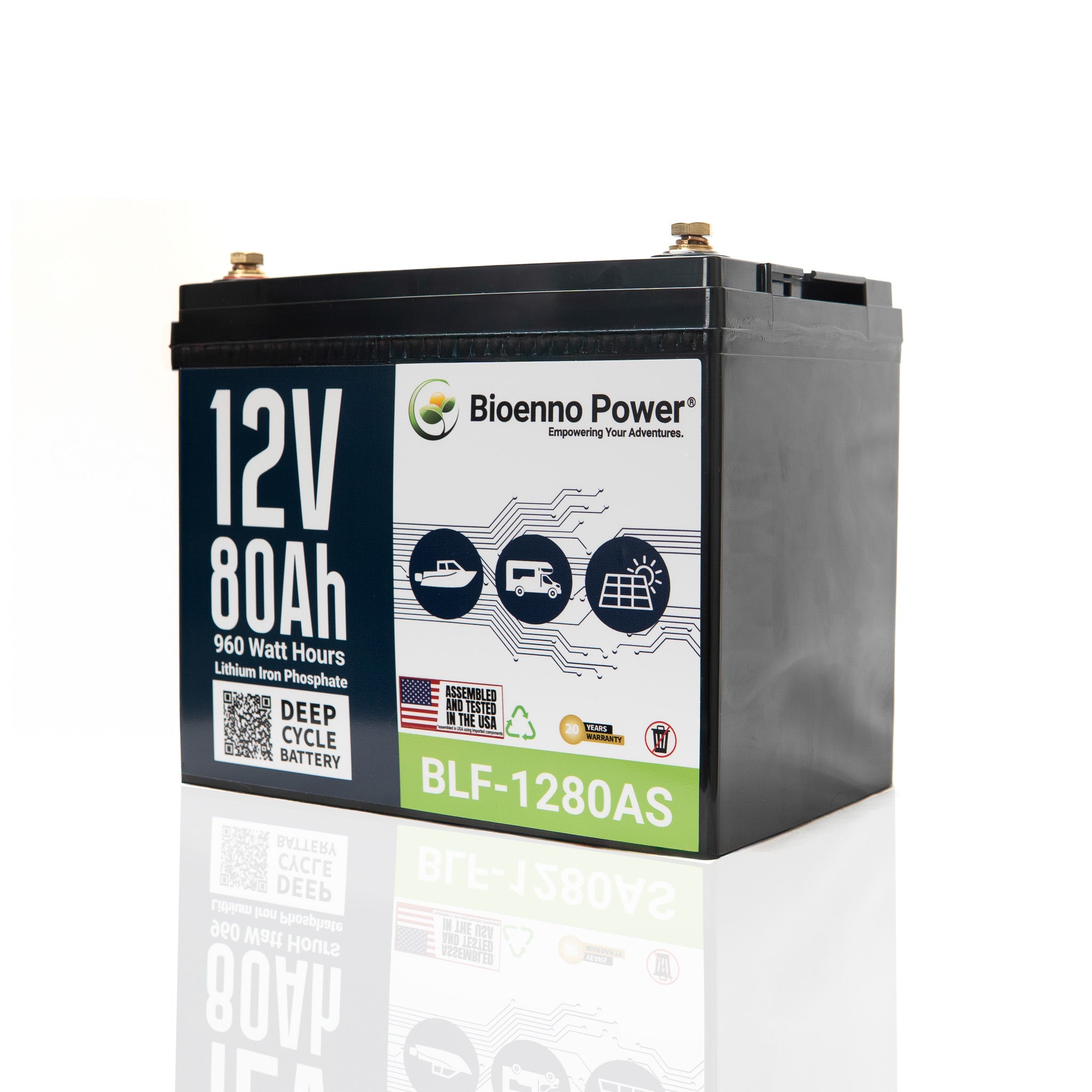
Budget for at least 1.5 times your calculated daily load in usable battery capacity. For a 500Wh daily load, that means a battery bank with at least 750Wh of accessible storage. With LiFePO4 depth of discharge factored in, a 12V 80Ah battery (960Wh total, 768Wh usable at 80% DoD) covers that load comfortably with room to spare on a cloudy day.
Using the Wrong Controller Profile
As covered earlier, running a LiFePO4 battery on a lead-acid controller profile does not just reduce efficiency in the short term. Over time, a battery that never reaches a proper full charge may not consistently allow cell balancing (depending on the battery’s BMS design), which can contribute to uneven cell voltages and reduced usable capacity. Bioenno's own charge controllers handle LiFePO4 profiles automatically when paired with Bioenno batteries, which is one of the practical advantages of keeping your components from the same ecosystem.
Starter Solar + LiFePO4 Setup Examples (Portable and Van Life)
Entry-Level Portable Setup
A weekend camper, kayak angler, or emergency-prep user running phone charging, LED lights, and a small fan uses roughly 200-400Wh per day. A practical starting configuration using Bioenno components:
Battery: 12V 30Ah or 50Ah LiFePO4 from Bioenno's solar-rated battery collection, covering 360-600Wh of usable storage
Panel: BSP-60-LITE 60W Foldable Solar Panel, which covers the daily load with margin in 4-5 peak sun hours
Controller: SC-122420JUD 20A PWM Solar Charge Controller for LiFePO4, with the correct LiFePO4 profile built in out of the box
Total panel and controller cost stays around $200. The setup is portable, uses components designed to work together, and does not require any profile configuration before your first use.
Mid-Range Van Life or Off-Grid Setup
A van life setup running a 12V compressor fridge, laptop, lights, and regular device charging uses 600-900Wh per day. Scaling up means moving to a larger battery and an MPPT controller for improved efficiency in variable conditions:
Battery: 12V 80Ah or 100Ah LiFePO4 (BLF-1280AS or BLF-12100AS) for 960-1,200Wh of total storage; browse Bioenno's complete LiFePO4 lineup.
Panel: BSP-100-LITE 100W Foldable Solar Panel, or two BSP-60-LITE panels chained together for 120W combined output
Controller: SC-122420NE 20A MPPT Controller for improved harvest in variable conditions, or SC-122430NE 30A MPPT for expanded panel capacity
At this scale, the MPPT controller pays for the price difference relatively quickly through improved daily harvest on cloudy days and shorter winter afternoons. The Bioenno PowerPack options (BPP-160 and BPP-M500) are also worth considering for users who want a fully integrated all-in-one solution without separate battery and controller components.
Getting the fundamentals right the first time means no troubleshooting dead batteries at a campsite and no rebuilding an undersized system six months down the road. Start with accurate load numbers, choose components built specifically for LiFePO4 chemistry, and browse Bioenno's complete solar and battery lineup when you are ready to put your setup together.