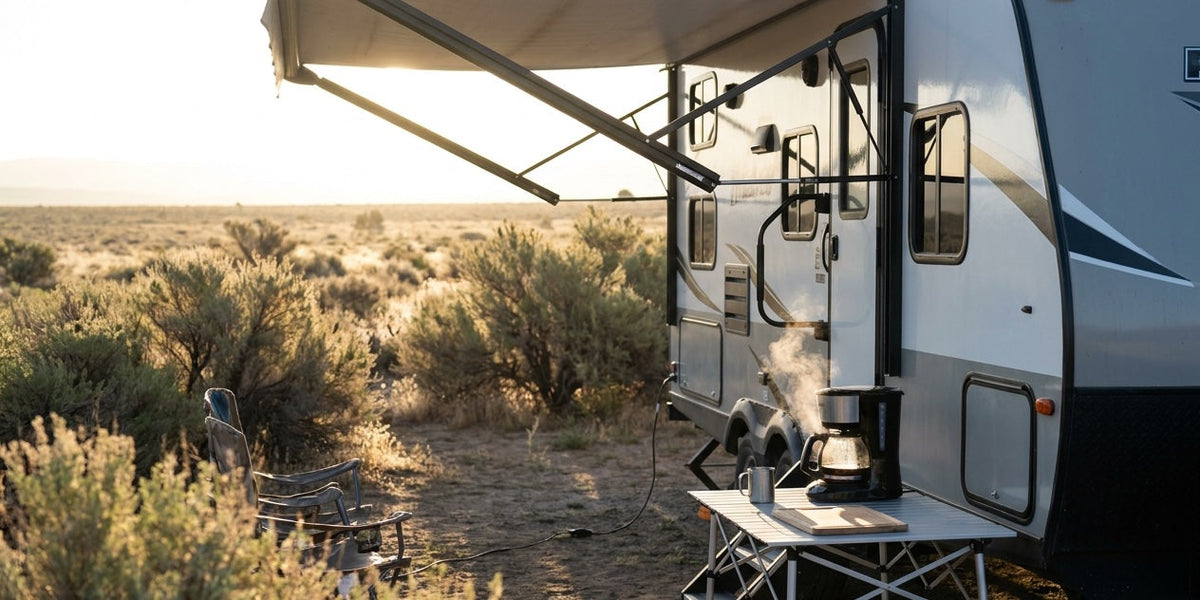
You plugged in the coffee maker, hit start, and the whole system went dark. Plenty of RVers who've just switched to lithium know that moment well, and the cause is usually the same: the RV inverter was sized by guesswork. This guide walks through how to total your real AC loads, pick the right waveform, and confirm that the battery, BMS, fuse, and cables can actually deliver that power.
How to Total Your AC Loads and Surge Watts
Add up the running watts of every AC appliance you plan to use at the same time, then check the surge rating of the largest motor or compressor load. Your inverter's continuous rating should cover that running total, and its surge rating should cover the startup spike, with some headroom left over. Always confirm wattage on each appliance's nameplate, because guesses and online averages can be far off.
- List every AC appliance you want to run, from the coffee maker down to phone and laptop chargers.
- Write down the nameplate watts for each one.
- Mark which items will run at the same time.
- Add up the running watts of that group. That's your continuous total.
- Put the largest single startup surge on top to see your peak demand.
Running Watts vs Surge Watts
Running watts are what an appliance pulls once it's going. Surge watts are the brief spike at startup, and they matter most for anything with a motor or compressor, like an air conditioner or a blender. A resistive load such as a coffee maker mostly draws what the label says. Your inverter has to handle both numbers. Otherwise it shuts down the moment something kicks on.
Microwaves, Coffee Makers, and Laptop Chargers
Laptop chargers are the easy ones, often sipping well under a hundred watts each. Coffee makers and microwaves? Another story. They're heating loads, and the number printed on a microwave's door can be lower than what it actually pulls from the wall, so look for the electrical rating on the back label instead. In most rigs, it's the heating appliances that end up deciding your inverter size.
Pure Sine Wave or Modified Sine Wave for an RV Inverter
A pure sine wave inverter produces smooth AC power much like a wall outlet at home. A modified sine wave inverter produces a blockier, stepped approximation. Plenty of simple loads tolerate that stepped version just fine. Others don't.
Laptop chargers, other electronics with switching power supplies, and motor loads tend to run cooler and quieter on pure sine wave power. Put them on modified sine wave and you may hear buzzing, notice devices running warm, or find that some chargers refuse to work at all. It varies by device. Check what the manufacturer says about yours.
For most RVers, the rule is simple. If you're running electronics, chargers, or anything with a motor, choose pure sine wave. Modified sine wave belongs on a short list of simple, rugged loads (and only ones you've confirmed are compatible).

Can Your Lithium Battery and BMS Support the Inverter
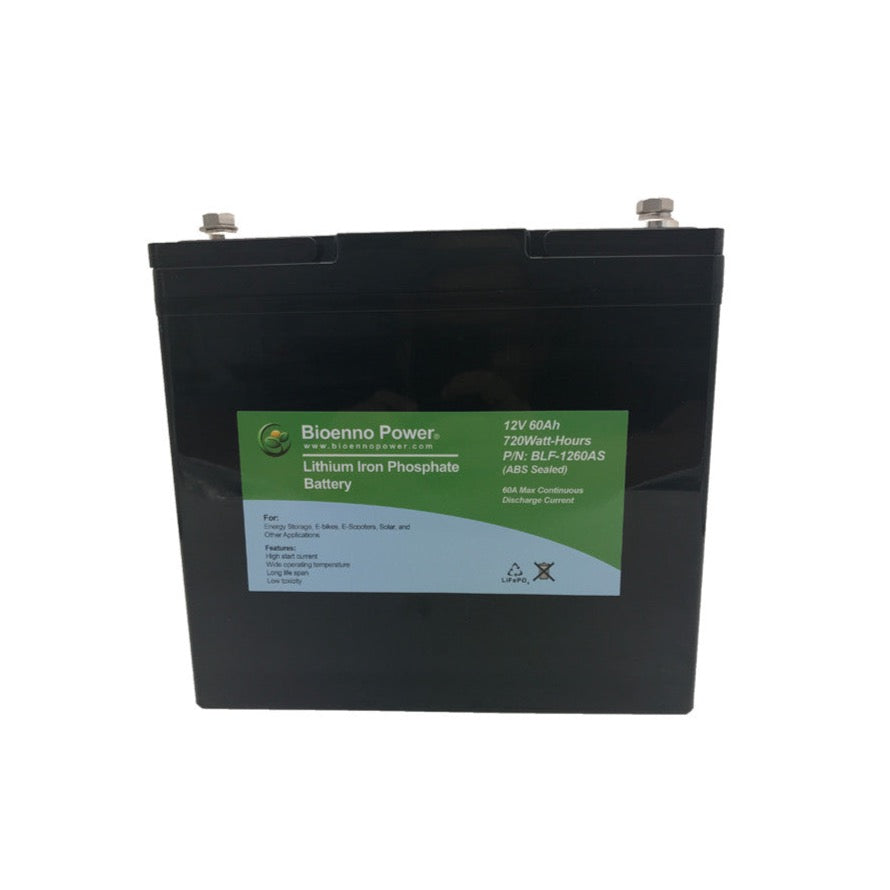
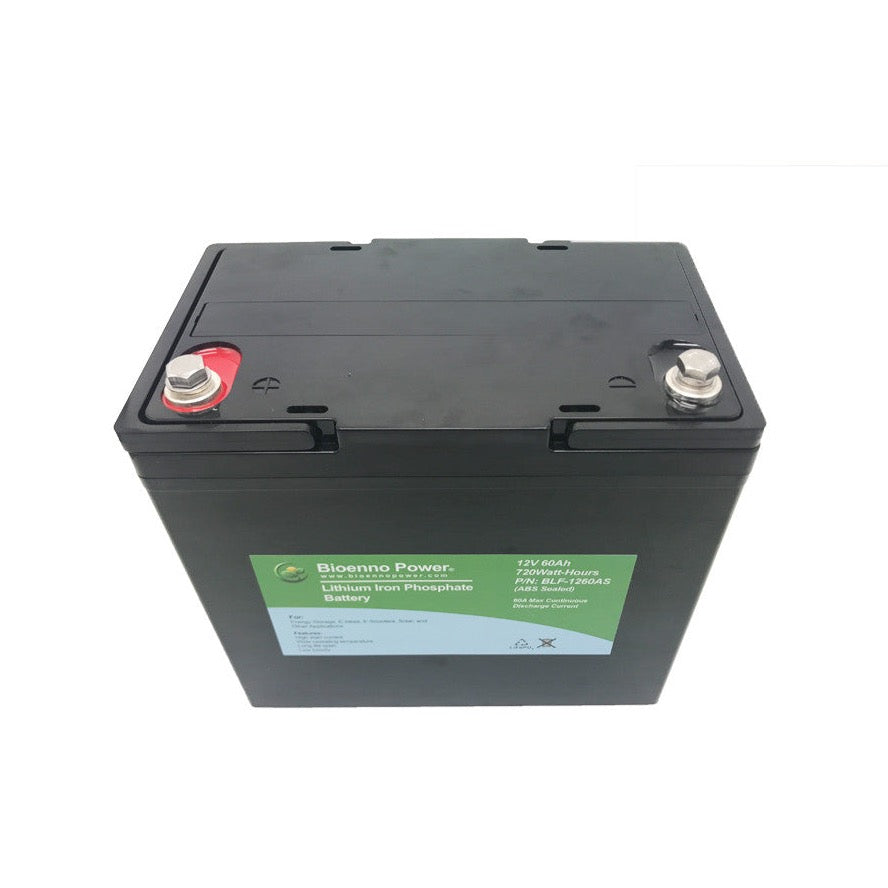
Yes, if the battery's continuous discharge rating and BMS limit exceed the DC current the inverter will draw at full load. To estimate that current, divide inverter watts by battery voltage, then add a margin for inverter losses. Confirm the rating for your exact model with the manufacturer before buying. Comparing options? You can browse 12V LiFePO4 batteries and check each listing's specifications.
Continuous Discharge vs Surge Limits
Batteries carry two kinds of limits, just like inverters do. The continuous rating is what the battery can deliver for as long as you need it. The surge limit, if one is listed, covers short bursts only. Sizing to that surge number alone is a mistake, since your microwave may run for several minutes at a stretch. Size to the continuous figure.
How BMS Cutoffs Can Shut Down an Inverter
The battery management system exists to protect the cells. When current climbs above what it allows, it disconnects the battery, and the inverter loses its DC supply instantly. From the couch, that looks like a failed inverter. It isn't. The BMS did exactly its job, and pairing a large inverter with a small lithium RV battery is one of the most common ways to trigger it.
12V, 24V, or 48V Battery Banks
Same watts, higher voltage, lower current. A load that pulls roughly 100 amps from a 12V bank would pull about half that from a 24V bank, which means thinner cable, less heat, and less stress on the BMS. If your inverter is big, a 24V LiFePO4 bank may be worth considering. Just make sure the rest of your RV's DC system fits the plan.
Fuses, Cables, and Disconnects Done Right
Inverter runs carry a lot of current, and that's where wiring trouble starts. Undersized cable heats up. Long cable wastes voltage. And a missing fuse turns a short circuit into a fire risk.
Cable Size and Length
Keep the cable between battery and inverter as short as practical, and size it for the inverter's maximum current rather than the average. Your inverter's manual will spell out the cable and fuse requirements. Follow it. You won't find specific gauge numbers here, and that's deliberate, because the right answer depends on your inverter, your battery, and your run length.
Fuse Placement and a Battery Disconnect Switch
A fuse belongs close to the battery, on the positive line, so the cable is protected along its entire length. Add a battery disconnect switch and you have a safe way to isolate the system for service or storage. When it comes to permanent AC wiring in an RV, have a licensed installer review or perform the work. Mistakes there carry real safety consequences.
- Fuse mounted close to the battery, rated per the inverter maker's instructions
- Cable sized for maximum inverter current and kept as short as practical
- Terminals tight and secure, then checked again after the first few trips
- Battery disconnect switch within easy reach
- Installer review for any permanent AC wiring

Sizing Examples for Common RV Setups
Treat the numbers below as illustrative placeholders. Before making any decision, swap in the nameplate ratings from your own appliances.
A Coffee-and-Laptop Weekend Setup
Say a coffee maker is labeled 900 watts and a laptop charger 65 watts. That's 965 watts running. Divide by 12 and you get roughly 80 amps at the battery, before inverter losses; add a margin and you're planning for something closer to 90 amps. Now hold that number up against your battery's verified continuous discharge rating, plus your fuse and cable ratings. If any one of them falls short, the setup isn't ready.
A Microwave Setup
Suppose a microwave's label shows 1,500 watts of input power. On a 12V system, that's about 125 amps before losses, and noticeably more once you add a margin. A single load that heavy often ends up setting the inverter size, the cable size, and the battery requirement all at once. Move the same load to a 24V bank and it would draw roughly half the current.
Leaving Room to Grow
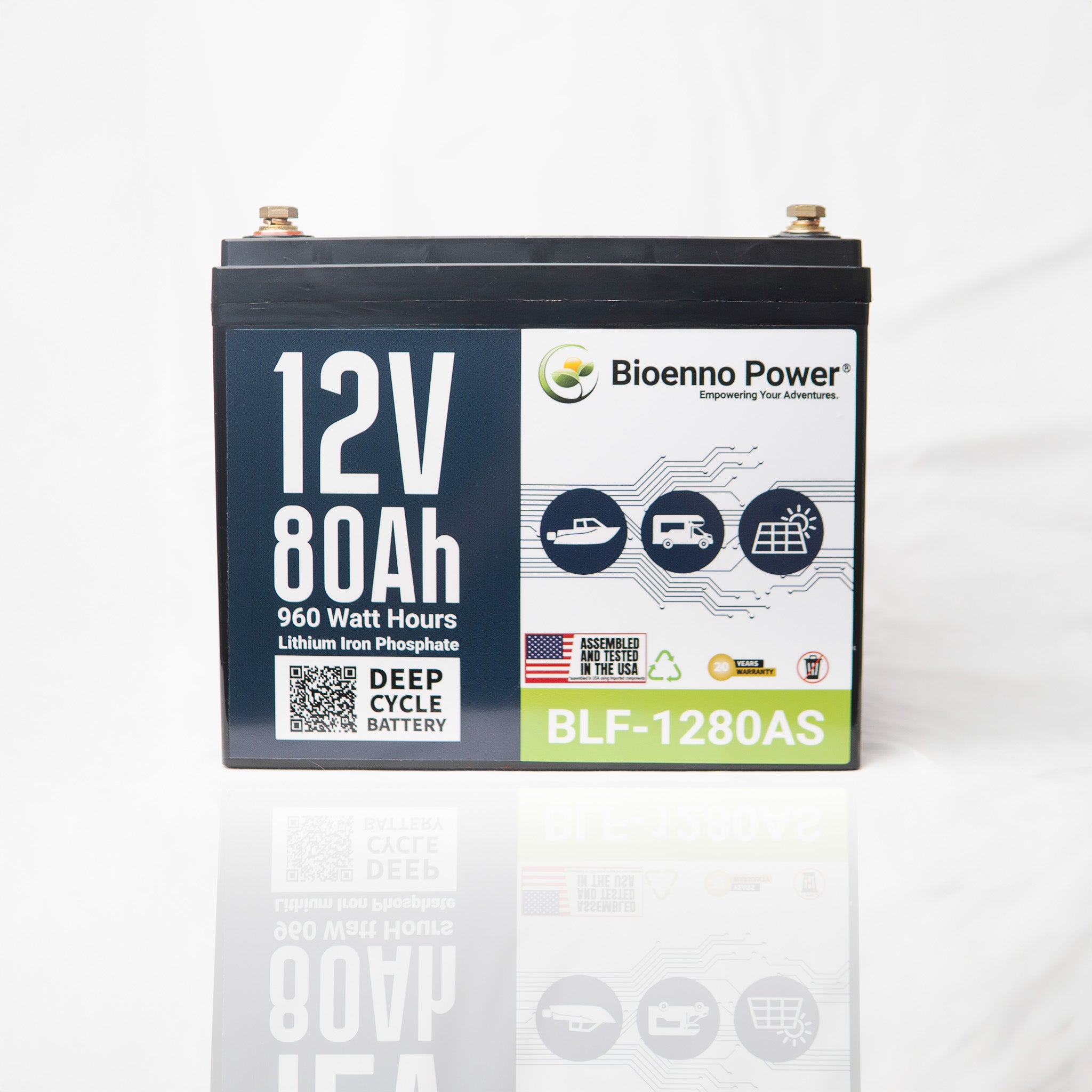
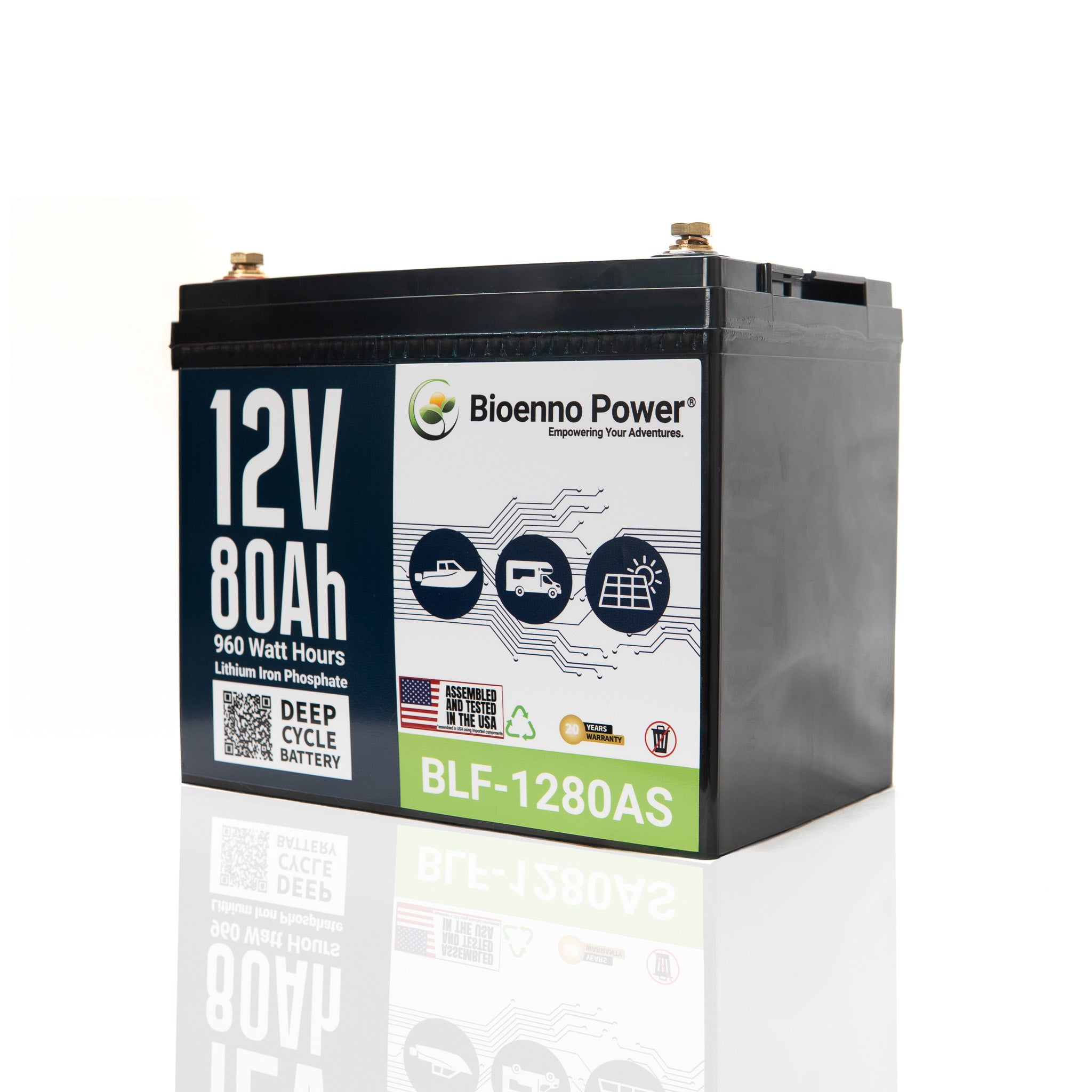
Most RVers add loads over time. A toaster here, a portable heater there. So choose an inverter with headroom, and plan the battery side so it can expand. Larger banks spread the current across more capacity, and you can browse 100Ah LiFePO4 batteries to see what building blocks are available. Whatever you add later, check that it stays compatible with your charging and wiring.
Choosing the Right Lithium Battery Bank for Your Inverter
It all comes down to four checks. Total your running and surge watts. Pick a waveform that suits your loads. Convert watts to DC amps at your system voltage, with margin. Then confirm that the battery's continuous discharge rating, the BMS limit, the fuse, and the cable all clear that number.
Ratings differ from model to model, so verify specifications with Bioenno support before pairing a specific battery with a specific inverter. When you're ready to compare, you can shop all Bioenno LiFePO4 batteries and narrow things down by voltage and capacity. No pressure. A right-sized system is worth the extra homework.
Can I run a microwave on an RV inverter?
Often yes, but a microwave is usually one of the heaviest loads in an RV. Check the electrical rating on its back label, size the inverter to cover it with headroom, and confirm that your lithium battery's continuous discharge rating and BMS can supply the resulting DC current.
Do I need a pure sine wave inverter?
For laptop chargers, other electronics, and motor loads, pure sine wave is the safer choice. Modified sine wave may work for simple loads, but it can cause noise or compatibility problems with sensitive devices.
Should I install an RV inverter myself?
Low-power DC accessories are one thing, but permanent AC wiring in an RV carries real safety risks. Follow the inverter maker's instructions and have a licensed installer review or complete the work.